
Here are essential brooding tips, focusing on the critical first day and subsequent days, to ensure your day-old chicks get the best possible start. Proper brooding is crucial for their survival and healthy development.
Essential Brooding Tips for Day-Old Chicks
The first few days of a chick’s life are the most vulnerable in brooding chicks. Providing the right environment, known as brooding, is paramount.
1. Prepare Your Brooder BEFORE Chicks Arrive
- Cleanliness: Thoroughly clean and disinfect the brooder area, feeders, and waterers. New chicks are highly susceptible to diseases.
- Space: Provide adequate space. A good rule of thumb is 0.5 sq ft per chick for the first two weeks, expanding as they grow. Avoid overcrowding.
- Bedding: Use absorbent and non-toxic bedding material like pine shavings, chopped straw, or commercial chick litter. Avoid cedar shavings as they can be toxic. Ensure bedding is dry and at least 2-4 inches deep.
- Draft-Free: Ensure the brooder is free from drafts, which can quickly chill chicks.
2. Temperature is KING (Especially on Day 1)
- First Week: Aim for a temperature of 90-95°F (32-35°C) at chick level. This is the most critical factor for day-old chicks as they cannot regulate their own body temperature.
- Heat Source: Use a brooder lamp with an appropriate bulb (red heat lamps are often preferred as they cause less stress and discourage pecking) or a radiant brooder.
- Thermometer: Always use a thermometer placed at chick level to monitor the temperature accurately.
- Observe Chicks: Let the chicks tell you if the temperature is right:
- Too Cold: Huddled together, chirping loudly. Lower the heat lamp or increase the wattage.
- Too Hot: Spreading out, panting, staying away from the heat source. Raise the heat lamp or reduce the wattage.
- Just Right: Chicks are evenly dispersed, quietly exploring, eating, and drinking.
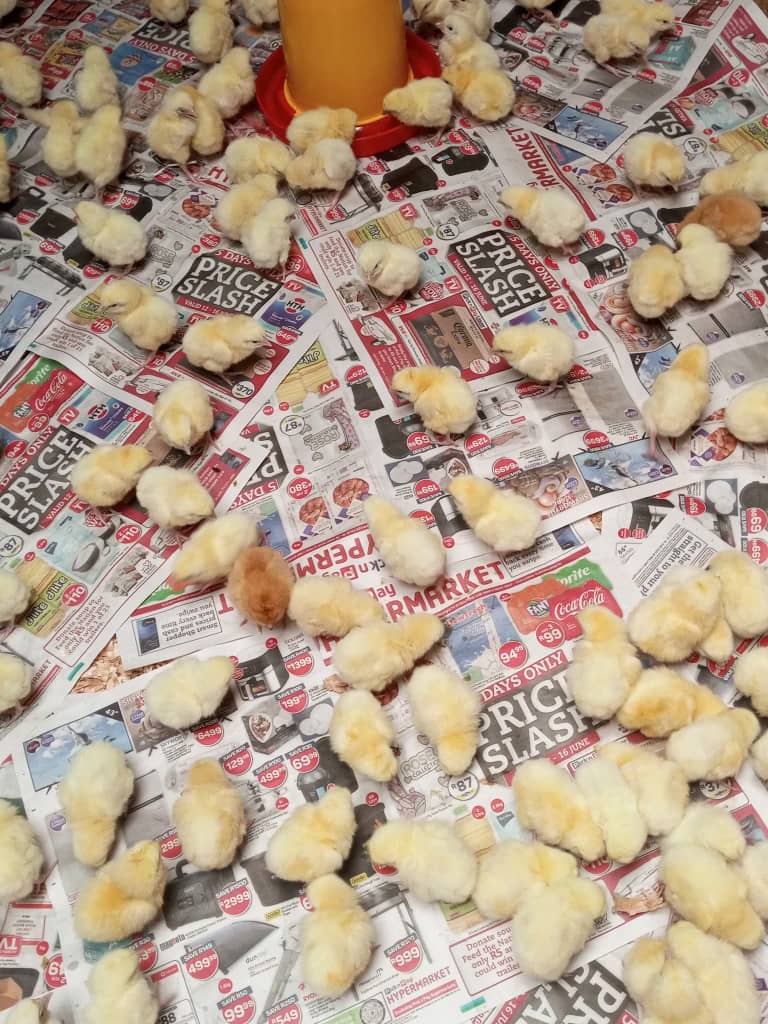
3. Immediate Access to Fresh Water
- Warm Water: On arrival, provide lukewarm water (not cold). This helps hydrate them and encourages drinking.
- Chick Waterers: Use chick-specific waterers that prevent drowning. Marbles or small stones can be placed in the water tray for the first day or two to prevent accidental drowning, especially with very young chicks.
- Placement: Place waterers away from direct heat to prevent the water from becoming too hot.
- Replenish Often: Water must be fresh and clean at all times. Change it multiple times a day as it gets soiled quickly.
- Electrolytes/Vitamins (Optional but Recommended): For the first 1-3 days, consider adding chick electrolytes and vitamins to their water. This helps with hydration and stress recovery from shipping.
4. Provide High-Quality Chick Starter Feed
- Immediate Access: Have chick starter feed readily available.
- Formulation: Use a specially formulated “chick starter” feed (typically 18-24% protein) that is finely ground for easy digestion. Do NOT use regular chicken feed or layer feed.
- Placement: Use chick feeders that prevent waste and contamination. For the first day, you can also sprinkle a small amount of feed directly onto a paper plate or clean newspaper to encourage eating.
- Grit (Optional for First Few Days): If chicks are exclusively on commercial starter feed, grit isn’t strictly necessary immediately. However, if they have access to bedding or other particles, fine chick grit can be introduced.
5. Monitoring and Observation
- Regular Checks: Check on your chicks frequently throughout the day and night, especially during the first 72 hours.
- Behavior: Observe their activity levels, vocalizations, and how they are distributed around the heat source. Healthy chicks are active, curious, and make soft peeping noises.
- Pastie Butt: Check for “pastie butt” (pasting of droppings around the vent), which can indicate stress, temperature issues, or dehydration. Gently clean with warm water if present, being very careful not to over-chill the chick.
6. Ventilation and Air Quality
- Fresh Air: Ensure good ventilation in the brooding area to prevent ammonia buildup from droppings, but without creating drafts.
- Avoid Fumes: Keep the brooder away from strong fumes from paints, solvents, or vehicle exhaust.
7. Hygiene
- Daily Cleaning: Spot clean soiled bedding daily. Replace all bedding regularly (every few days or as needed) to maintain hygiene and prevent disease.
- Clean Feeders/Waterers: Clean feeders and waterers daily, scrubbing them to remove any biofilm or residual feed/water.
8. Lighting
- 24-Hour Light for First Few Days: For the first 1-3 days, providing 24 hours of light (from the heat lamp) can help chicks find food and water more easily, encouraging a strong start.
- Gradual Reduction: After the first few days, you can gradually reduce the light to 16-18 hours to establish a natural day-night cycle.
By meticulously attending to these factors, particularly temperature and immediate access to water and feed, you will significantly increase the survival rate and health of your day-old chicks.